

A reference catalogue of salvaged building material — organised by what the material is, not by what it costs.

Recent RuinsSalvaged building material, catalogued
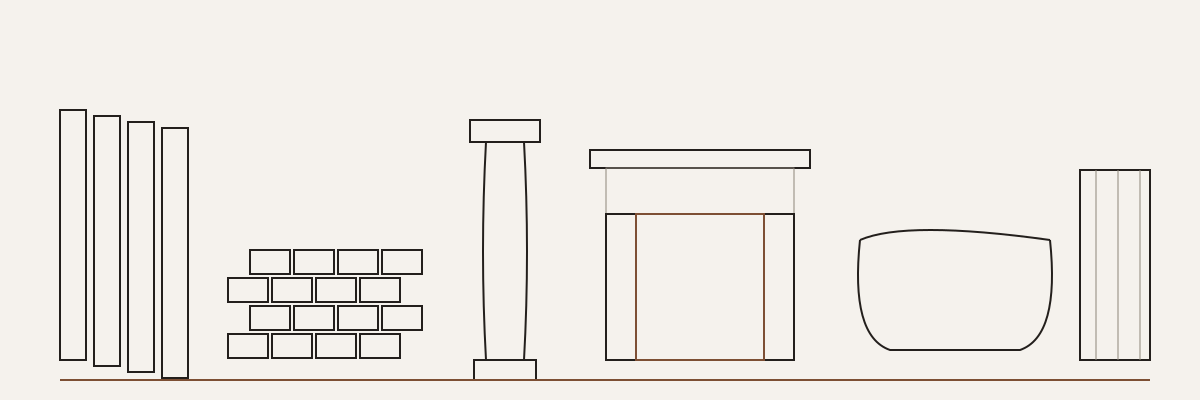
Wide line plate of stacked salvage: doors, brick, a column, a mantel, a cast-iron tub and an iron fence panel

Salvage, catalogued by material

Twelve material entries and three working guides, each describing what a salvaged piece is made of, how to read its age, what usually fails and what to check before you fit it.

Open the catalogue

How the catalogue is grouped

Entries are grouped by what the material actually is rather than by the room it came out of. Wood, metal, masonry, and glass and ceramic each fail in their own way, and knowing the fabric tells you more about a piece than knowing which house it was pulled from.

Every entry describes the same four things in the same order: what the material is, how to tell its age, what commonly fails, and what to check before fitting. Measurements are given as ranges, because salvaged material varies piece to piece and no two runs of the same thing are alike.
Entry in full

Every catalogue entry opens the same way: the plate, then the specification, then the prose.

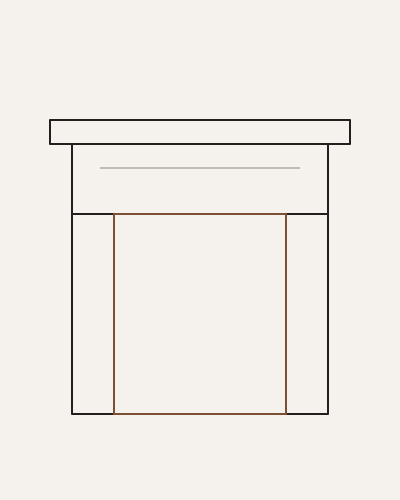
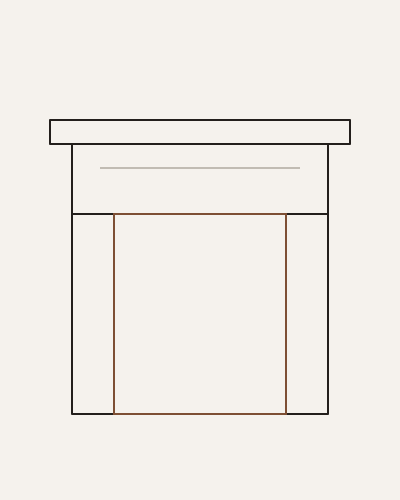
Line plate of a mantel shelf, frieze and legs framing a firebox opening

Mantels

Period range1850-1930
Usual fabricPine, oak, marble, slate, cast iron
Usual formShelf, frieze and two legs around a firebox opening
Wear to expectSplit legs, scorched inner edges, stripped and re-stripped paint

A mantel is measured from the opening outward, and an inch of error at the firebox is an inch that cannot be made up anywhere else on the piece.

Read the mantels entry

How to use this catalogue

Each entry is laid out identically so that two materials can be compared line for line: a plate of the form, a specification table giving the period range, the usual fabric, the usual form and the wear to expect, and then four short passages covering identification, age, failure and inspection.

Period ranges are ranges rather than dates, and dimensions are described rather than tabulated, because salvaged material is not manufactured to a standard and any two examples of the same thing will differ. Where a measurement matters, take it from the opening you are filling rather than from the fitting you are hoping to use.