Recent Ruins / Catalogue / Wood
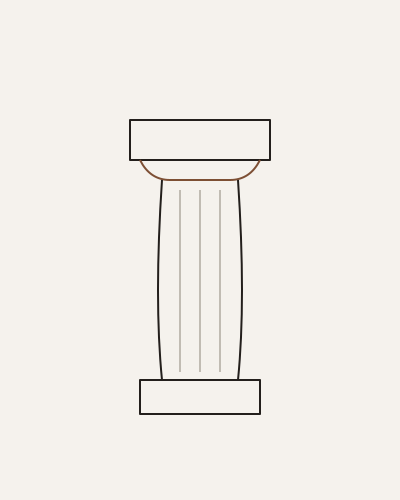
Columns
| Period range | 1860-1930 |
|---|---|
| Usual fabric | Staved pine, cast iron, terracotta, cast stone |
| Usual form | Shaft with base and capital, plain or fluted, tapered or parallel |
| Wear to expect | Open stave joints at the base, rot in the bottom eight inches, missing capital leaves |
A porch column and a decorative column are the same shape and completely different objects, and the difference is entirely in what is happening inside the shaft.
What it is
Timber columns are usually built up from staves glued into a hollow tube, then turned, which is why they open along a seam rather than checking like solid stock. Cast-iron columns are hollow too, but with a consistent wall and often a flange at both ends. Capitals come separately: plain moulded, a simple scrolled form, or the deeper foliate order, and they are frequently not original to the shaft they arrive on.
How to tell age
Entasis is the tell on turned timber shafts: earlier work has a subtle swell along the length, later production is often a straight taper or entirely parallel. On cast iron, look for a flange with cast bolt holes and a foundry mark. Composition and pressed-metal capitals are later substitutes for carved ones and are much lighter in the hand.
What commonly fails
The bottom of a timber column stands in whatever water the porch floor holds, so the failure is nearly always rot in the lowest few inches with the rest of the shaft sound. Staves open at the glue line once the column has dried indoors. Cast-iron columns fail at the base flange, where dirt collects and rust builds under the paint.
What to check before fitting
Establish first whether the column will carry load, and treat any salvaged shaft as decorative until you can see the wall thickness. Measure shaft diameter at top and bottom as well as overall height, because a matched pair of columns of the same height can still taper differently. Check that base and capital actually belong to the shaft.