Recent Ruins / Catalogue / Metal
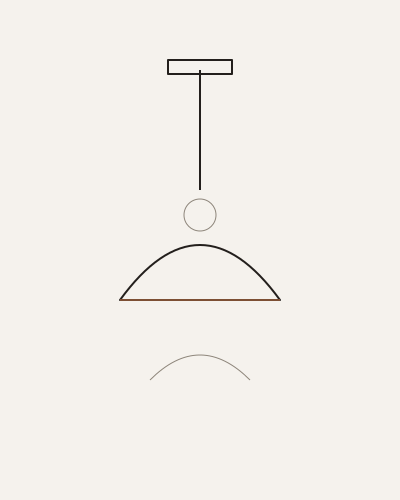
Salvaged lighting
| Period range | 1890-1950 |
|---|---|
| Usual fabric | Brass, bronze, painted steel, glass shades |
| Usual form | Pendants, sconces, ceiling roses, gasolier conversions |
| Wear to expect | Perished insulation, seized shade rings, mismatched shades |
Everything above the shade is worth having and everything inside it needs replacing, without exception.
What it is
Salvaged fittings divide into pendants hung from a rose, sconces fixed to the wall, and converted gas fittings that carry the pipework of one system and the wiring of another. Shades are almost always separate objects with their own history; a set of four matching shades on one fitting is unusual enough to be worth checking twice. Brass and bronze bodies were frequently lacquered, and the lacquer is what has gone yellow, not the metal.
How to tell age
Gas conversions are self-identifying once you know the signs: a body with a solid tube, a stop cock boss now blanked, and a wire route that was clearly drilled later. Early electric fittings have porcelain lampholders and cloth-covered flex. Shade fitter sizes are the practical dating tool, and they standardised late.
What commonly fails
The insulation on original flex perishes into powder, and any original internal wiring must be treated as failed regardless of appearance. Shade rings seize with lacquer and old rubber. Brass thins where it was polished for decades, particularly on the high points of a sconce backplate.
What to check before fitting
Plan on rewiring completely before you value the fitting at all. Check the shade fitter diameter against shades you can actually obtain. Support the fitting by its canopy and see whether the body moves independently, because a loose central thread is the one repair that means dismantling the whole piece.