Recent Ruins / Catalogue / Metal
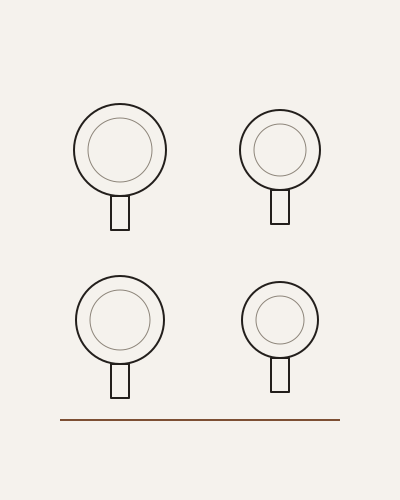
Door knobs
| Period range | 1840-1940 |
|---|---|
| Usual fabric | Porcelain, glass, brass, nickel-plated brass, wood |
| Usual form | Pairs on a threaded spindle, usually with rosettes |
| Wear to expect | Loose set screws, plating worn through at the palm |
Knobs are the most-handled fitting in a house, and they are the fitting most often replaced, so a salvaged pair rarely comes out of the same door it went into.
What it is
A knob is a two-part fitting: the knobs themselves and the spindle that ties them through the lock. Porcelain knobs turn up in brown, black and white, the brown ones generally earlier and more variable in tone. Glass knobs are usually later, faceted, and come both clear and in a faintly tinted natural glass that reads green or amber against a white wall. Milk glass sits between the two. Metal knobs run from cast bronze and brass through pressed steel, with nickel plating over brass common in the plumbing-adjacent rooms of the early twentieth century.
How to tell age
Look at the shank rather than the face. Early knobs are threaded onto a square spindle and held with a small side screw; the shank is often a separate collar brazed or pinned to the knob. Later production casts the shank and knob as one piece. Machine-perfect facets and a seamless plating line both point late.
What commonly fails
Porcelain chips at the rim rather than cracking through, and a chipped rim will keep working indefinitely. The real failures are mechanical: a stripped set screw, a spindle worn round at the corners so the knob spins without throwing the latch, and plating that has gone through to the brass and then oxidised in the low spots.
What to check before fitting
Fit the pair on a spindle and turn them before anything else. Check that both shanks thread to the same depth, that the set screw bites, and that the rosettes match each other rather than merely matching the knob. Measure the door thickness you are fitting to, because spindle length is the thing that most often makes a good pair unusable.